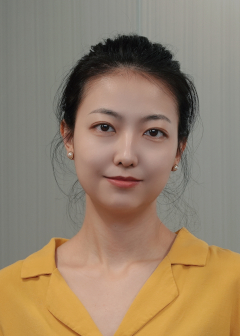
Dr. Kexin Huang received her Ph.D. in Information and Communication Engineering from Xidian University in 2021. She then completed a postdoctoral fellowship at West China Hospital, where she began to systematically apply computational methods to biomedical questions before joining UTHealth.
Her research centers on integrating multi-omics data, such as genomics, transcriptomics, microbiomics, and metabolomics with artificial intelligence and advanced computational modeling to dissect regulatory mechanisms in aging, senescence, and diseases. Another major focus of her work is the construction of gene function annotation resources based on multi-omics integration. By combining large-scale experimental datasets with bioinformatic tools, she develops tools and databases in aging and complex diseases.
- Tell us about your research center and/or what research/work you are currently working on.
My research focuses on integrating multi-omics data with artificial intelligence to understand regulatory mechanisms in aging and age-related diseases, especially immune senescence. We also develop gene function annotation resources and computational tools that help interpret large-scale biological datasets and identify potential therapeutic targets.
- What type of student or Postdoctoral Fellow are you looking for to work in your center?
We are looking for highly motivated students and postdoctoral fellows with strong quantitative skills and an interest in biology. A background in bioinformatics, computer science, statistics, or related fields is very welcome, as well as curiosity, independence, and a willingness to learn new methods and collaborate across disciplines.
- What does the future of your research look like?
In the future, my research will move toward multi-omics integration by using single-cell transcriptomic, spatial data, and clinical information. We aim to translate these computational insights into biomarkers and strategies that can guide precision prevention and treatment of age-related diseases.
- What does the future of informatics look like?
The future of informatics will be increasingly integrative, interpretable, and patient-centered. As data from genomics, imaging, wearables, and electronic health records become more connected, informatics will provide the tools to turn this complexity into actionable knowledge, supporting personalized medicine and more efficient healthcare systems.
Education
- Ph.D. Bioinformatics Science & Technology, Xidian University, Xi’an, Shaanxi, China, 2021
- B.S. Industry & Business Administration, Xidian University, Xi’an, Shaanxi, China, 2016
Areas of Expertise
- Bioinformatics
- Single-cell and Multi-omics Analysis
- Aging and neurodegeneration diseases